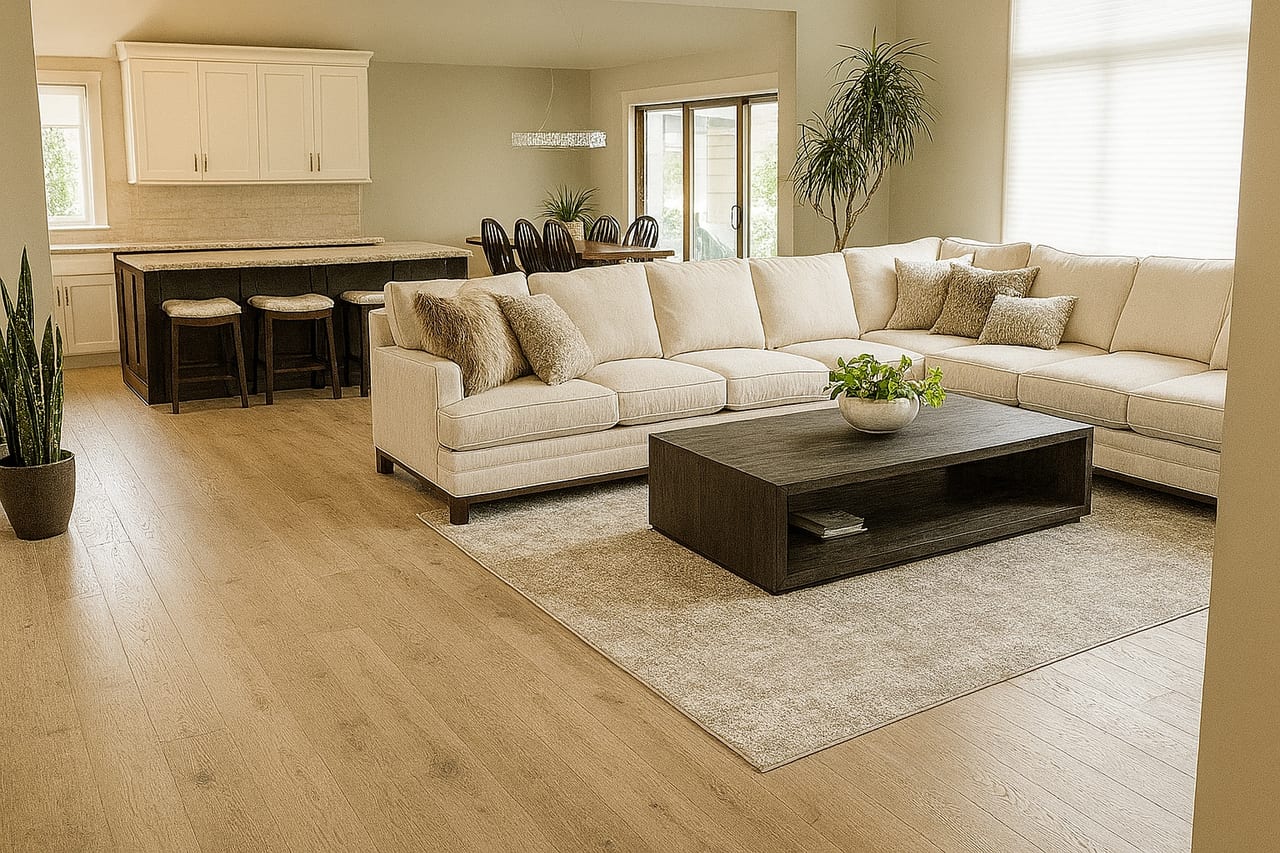
Wide-plank light oak flooring running through an open-plan living room and kitchen in a Kansas City metro home

Engineered Hardwood Floors
in the Kansas City Metro

That wide-plank floor you keep seeing? It's real wood. And more often than not, it's engineered.

Serving Lenexa, Overland Park, Leawood & the greater Kansas City metro area

What You're Actually Getting

Real wood on top, the right floor underneath.

  • A genuine hardwood surface, the same species and finish as a solid floor
  • The wide-plank, long-board looks people want now
  • Enough real wood on top to refinish for years, not replace

Call or Text Anytime (913) 839-1609
In-House Installation Team
No Consultation Fee
Appointment-Only Showroom
25 years of Experience

Engineered Hardwood Is Real Wood

The surface you see and walk on is genuine wood, the same oak or walnut you'd choose in a solid floor. What's different is underneath: that real wood sits on a stable, built-up core that holds the board flat through Kansas City metro humidity swings. It looks like solid wood and lives like it, because on top, it is.

The Part You Can't See

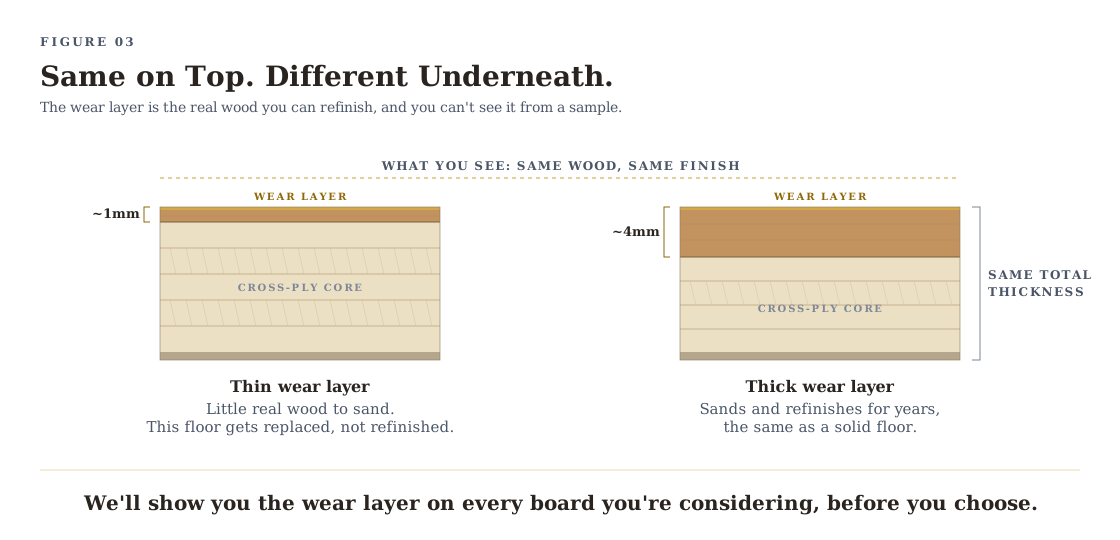
The wood you walk on is a layer on top, and how thick it is decides whether this is a floor you refinish and recolor for years, or one you replace. Two boards can sit side by side in a showroom, look identical, and quote about the same, yet wear completely differently. You can't read the difference off the sample in your hand. It's the single thing most worth getting right, and it's what we're here for: we'll show you the difference and help you choose.

Two engineered hardwood boards of the same total thickness, identical on the surface. One has a thin wear layer of about one millimeter and gets replaced when worn; the other has a thick wear layer of about four millimeters and refinishes for years like a solid floor.

That layer is called the wear layer, and it runs from about 1mm on a budget board to 6mm on a premium one. Around 3mm and up, it sands and refinishes like a solid floor, so you can recolor or refresh it years from now as your style changes. Much thinner, and there's little left to sand, so the floor gets replaced instead. And a thicker board overall doesn't mean a thicker wear layer, which is why it's the number worth asking about.

The Look People Want Now

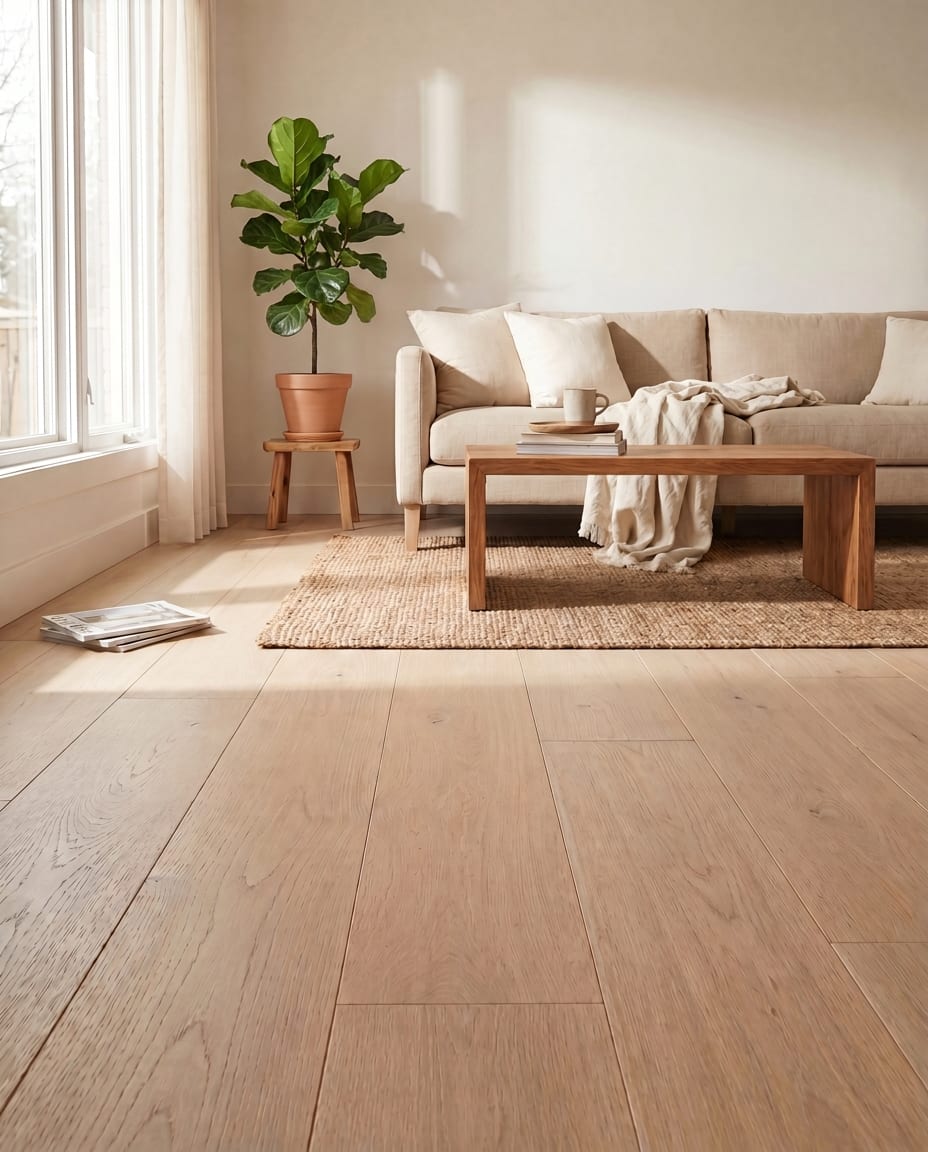
Wide-plank white oak is the look right now: long, wide boards with few seams, in pale matte or warm character tones. What most people don't realize: at those widths a solid board fights the seasons and tends to cup and gap, so the wide floors filling your feed are, more often than not, engineered. The width is the reason. We carry white oak and other species in wide-plank, long-board formats, in virtually any stain and finish direction you're after. Bring us the look you're chasing and we'll show you the boards that get you there.

Already set on a species? See our White Oak page, or just tell us when you call.

Sunlit living room with wide-plank pale white oak flooring, a linen sofa and a sheer-curtained window

One Company, Start to Finish.

From the floor you choose to the crew that installs it, you're working with us the whole way.

Guidance From People Who Install

The person selling you a floor at a big box store or online has most likely never installed one. We have, every day, so your guidance comes from hands that have laid the floor, not just sold it. After all, you're not buying a pile of boards. You're buying a floor installed in your home.

Hands that have laid the floor

Our Own Crew. No Outsourcing.

We install what we sell, with our own crew, never an outside contractor. The big sellers hand the install to a separate crew, so your project is split across people who don't answer to each other, and if the schedule slips or something isn't right, no one owns it. With one crew the whole way, there's no handoff, no finger-pointing, and no strangers in your home.

One crew, no handoffs

Competitive With Anyone.

Because one company sells and installs your floor, there's no middleman markup and no sales commission stacked on the install, so more of what you pay goes into the floor itself. Getting our read on your project costs nothing.

No consultation fee

Engineered Hardwood FAQ

What engineered hardwood really is, whether it can be refinished, the one spec that matters most, and how matching existing floors works.

Is engineered hardwood real wood?

Yes. The surface you see and walk on is genuine hardwood, the same species you'd choose in a solid floor, whether white oak, walnut, or something else. What's different is underneath: that real wood top sits on a built-up core that keeps the board flat and stable. It isn't a printed lookalike. It's wood on top, engineered below.

What's the difference between engineered hardwood and laminate or vinyl?

It's the difference between real wood and a picture of it. Laminate and luxury vinyl print an image of wood under a clear wear surface; convincing, but no actual wood. Engineered has a genuine hardwood surface over a stable core, so it can be refinished when the wear layer allows and ages like wood, because it is wood. Vinyl and laminate have their place for the look of wood for less, and we install those too; if you want actual hardwood, that's engineered or solid.

Can engineered hardwood be refinished?

Often, yes, and it comes down to the wear layer, the band of real wood on top. A thicker wear layer can be sanded and refinished, sometimes more than once, so you can recolor or refresh the floor years from now as your style changes. A thin one leaves little to sand, so that floor gets replaced instead. You can't judge it from a showroom sample, so tell us the floor you're considering, and we'll tell you whether it's one you can refinish down the road or one you'd replace.

What is the wear layer, and why does it matter so much?

The wear layer is the layer of real wood on top, above the stable core. It's the part you live on, and it decides whether the floor can be refinished later or has to be replaced. It's also nearly impossible to see in a showroom: two boards can look identical with very different wear layers. This is the single thing most worth getting right with engineered, and the easiest to get wrong on your own. Reading it, and matching it to how you'll use the room, is a big part of what we do for you.

Is engineered hardwood cheaper than solid?

There's no single answer, because engineered hardwood spans a wide price range. A board with a thin wear layer can be quite inexpensive. One with a thick layer of real oak on top, the kind you can refinish for years, costs more, because you're paying for more actual wood. So the useful question isn't engineered versus solid, it's where on that range the right floor for you sits, the wood and construction that fit how you'll use the room. That's what we help you figure out, so your money lands where the value is for you.

Do you match or extend existing engineered floors?

Often, yes, and it's work many flooring companies refer out. Matching involves species, width, grade, and finish, and getting it right means seeing the existing floor in your home's actual light. We work out what's realistic on-site, and if a clean match isn't achievable, we'll say so. When it is, the seam should be something you have to hunt for.

You're Hiring a Reputation.
Not a Retail Clerk.

"I founded All Dimensions Flooring with a single goal: to combine the selection of a major retailer with the personal accountability of a craftsman. You aren't handed off to a rotating cast of clerks. You're hiring my 25-year reputation."

Jason Jespersen personally oversees every project from the first call through final installation. On the phone he'll listen to what you're working with, walk through your options, and tell you what depends on seeing the floor in person, like how much usable wood an engineered floor really has. If a visit makes sense for both of you, you'll know what to expect before he arrives. When the job is done, you'll know his name, because he introduced himself on day one.

★★★★★ Mentioned by name in virtually every review
Real Reviews From Real Homeowners.

Ready to Talk to Jason?

Tell us about your floors. Jason will reach out within one business day to listen and help you figure out what makes sense for your floor.

Required field

No consultation fee.