Hardwood Floor Refinishing
in the Kansas City Metro
- Refinishing, restoring, matching, and extending
- We install new hardwood too, so our recommendation fits your floor
- In-house crew, no outsourcing
- 233 five-star Google reviews
- No consultation fee
Three Disciplines. The Floor Tells Us Which You Need.
Most homeowners are not sure where their job fits. The terms blur together online and the advice changes depending on who's selling what. Here's how we use them, so the call has shared vocabulary.
Refinishing
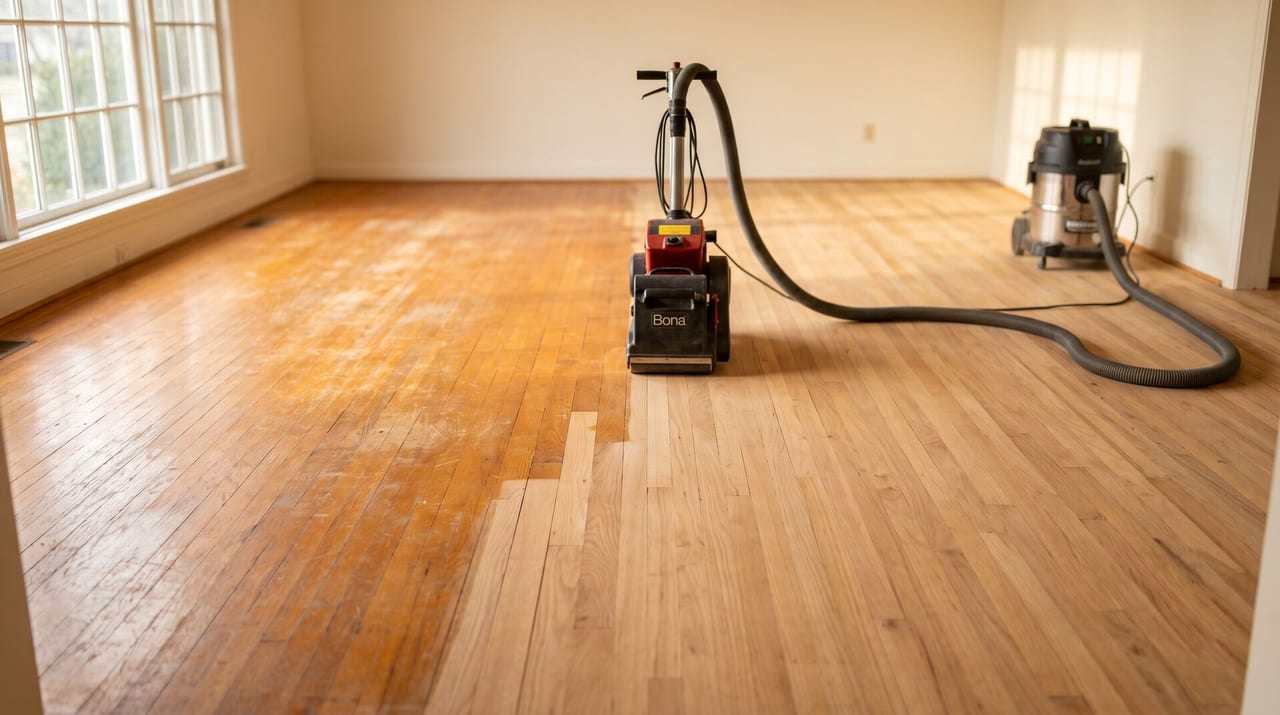
Sanding existing hardwood back to bare wood, then applying new stain and new finish. Same boards, new look. Bare wood opens up virtually any direction in color, sheen, and character, so the conversation often starts with what you'd like to see. We install new hardwood too, which means we have no reason to push refinishing when replacement is the better answer.
Restoration
Broader scope. Board replacement, repairs to damage, sometimes structural work alongside the refinishing itself. Restoration is where the judgment calls accumulate, and Jason oversees every project. The reviews speak to how those calls land.
Matching and Extending
A capability, not a separate service. Bringing new boards into an aged floor, or extending hardwood into a previously carpeted room, so the seam doesn't show. This is judgment work, not formula work, and Jason has been doing it for 25 years.
Matching New Wood to Decades-Old Floors Is a Judgment Call, Not a Formula.
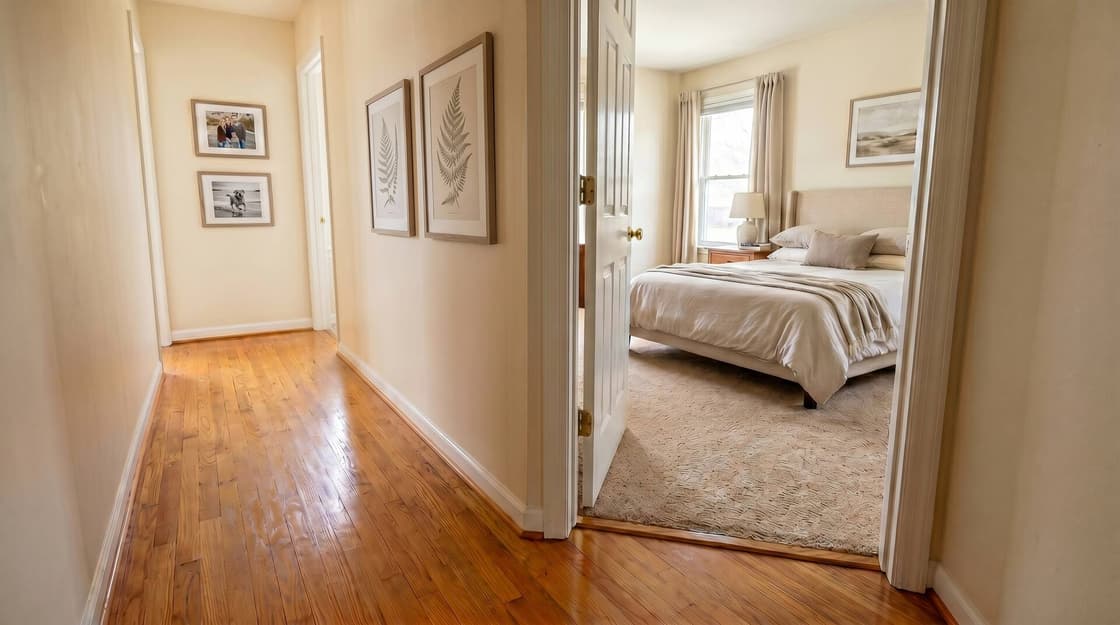
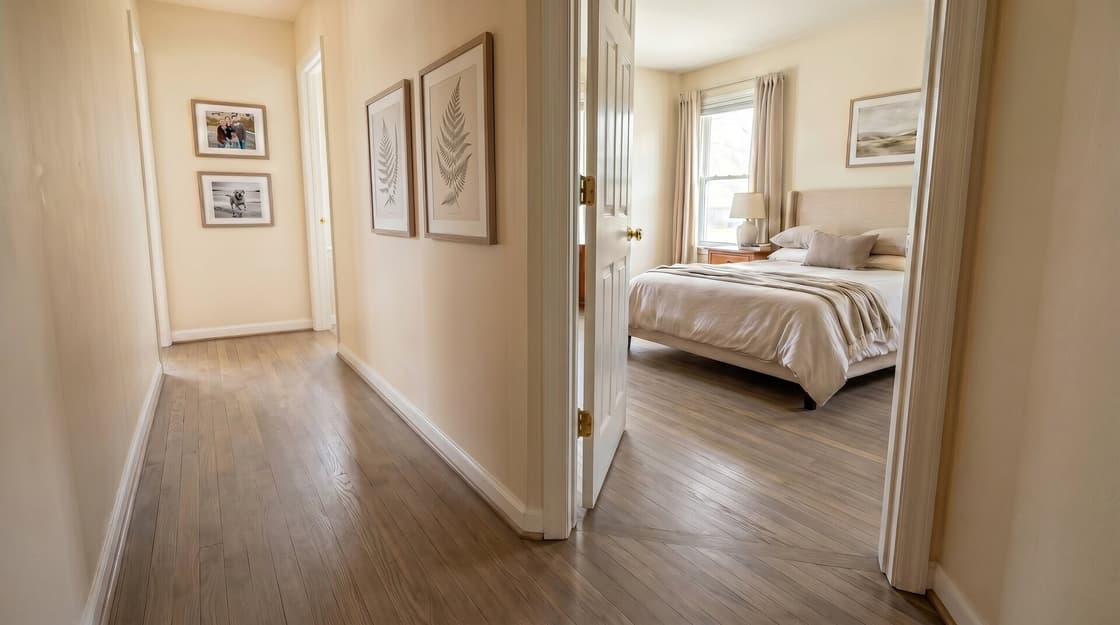
When you extend hardwood from one room into another, two things happen. The new raw wood gets stained and finished. And the existing floor, aged and shifted in tone from years of light and foot traffic, gets sanded and refinished alongside it. The aim is a unified floor where the line between old and new is hard to find.
Many flooring companies refer this work out. Some don't take it at all. Our crew does it in-house, and the planning happens with Jason before the work starts. The judgment calls get made in advance and built into the quote: how the new wood will take stain compared to the old, where the seams should fall, what sheen will keep light from catching the transition. By the time the crew is on site, the decisions are settled and the job runs to a plan. It's the work Jason has been doing for 25 years and the work the reviews most often name him for.
Hallway hardwood, refinished and extended into a previously carpeted bedroom. Drag to compare.
Here's How We Think About It.
The decision is rarely obvious from across the room, and Jason will not make the final judgment from the phone. What the phone call can do is establish the rough shape of the job, discuss what depends on seeing the floor, and tell you whether a visit is likely to be worth your time. There is no charge for the conversation, whether or not it leads to a visit.
When Refinishing Is Usually the Right Call
The wood is structurally sound. There is enough material left for at least one more sanding. The issue is appearance: wear on the finish, outdated stain color, a sheen that no longer fits the home. Older homes often have tight-grained hardwood cut from mature trees that is not available new. That wood is worth keeping, and refinishing costs meaningfully less than replacement.
When Replacement Is Usually the Right Call
The floor has been sanded too many times already, or the wear layer on engineered hardwood is too thin for another pass. Water damage, pet stains, or subfloor problems extend below what refinishing can reach. The existing species or board width is wrong for what the room needs to become. Or the layout itself is changing, walls moving, rooms opening up, and the floor needs to be reworked anyway.
Sometimes both paths could work, and the decision comes down to budget, timeline, and how much change you actually want. In those cases we lay out the trade-offs and let you decide.
Common Questions About Refinishing
Straightforward answers to what homeowners ask most.
How do I know if my floor can be refinished?
The main factor is how much solid wood remains. Solid hardwood floors can typically be refinished several times. Engineered hardwood depends on the wear layer thickness. We will look at your floors and give you a clear read.
When would you recommend replacement over refinishing?
When the floor has been sanded too many times already. When damage extends below what refinishing can reach, water damage, deep staining, subfloor issues. When the wear layer on engineered hardwood is too thin. When the species or board width is wrong for what the space needs to become. And sometimes when the layout itself is changing enough that refinishing the old floor does not make sense. We install new hardwood as well, so if replacement is the right call, we can handle that project too.
Can you match new hardwood to floors that have been in my home for years?
Yes. It is one of the most common reasons homeowners call us, and it is work many flooring companies refer out or decline to quote. Matching requires sanding and refinishing the existing floor alongside the new wood, same stain and finish applied together, so both sections read as a single floor.
Can I change the color of my floor when we refinish it?
Yes. Once the existing finish and stain are sanded back to bare wood, the floor can take virtually any direction: lighter, darker, warmer, cooler, more matte, more satin. Weathered Oak in a satin sheen is currently the most common direction homeowners land on, but it is far from the only one. The honest answer about what your specific floor can take depends on the wood species and condition, which Jason can discuss on the phone call before any visit.
Do we need to leave the house during the work?
For most refinishing jobs, you can stay in the home, though some jobs work better if you don't. The approach gets discussed and agreed as part of the planning and varies based on the floor plan and how you live in the space. The bigger consideration is usually the finish cure, not the sanding. Water-based finishes cure faster than oil-based, and Jason will walk through the timing on the phone call so you know what to plan for.
How do you handle dust during the work?
Sanding hardwood produces dust, and we do not make dust-free claims. The right mitigation strategy depends on your specific job and your home. A whole-floor refinish in an empty house calls for a different approach than a single room next to a furnished living space. We discuss and agree on the approach as part of the planning, and it gets built into the quote. Jason will go through the options with you.
My floor has already been refinished before. Can it be done again?
Possibly. Each sanding removes a small amount of material. Whether there is enough left depends on the original thickness and how many times the floor has been refinished. We will check this during the visit.
We have carpet in the hallway and hardwood in the rooms around it. Is it worth extending the hardwood?
For many homeowners, yes. Hardwood is more popular now than it has been in decades. Carpet that felt right when it was installed, or that came with the house when you moved in, can feel dated next to today's continuous hardwood look. Extending the wood into hallways, adjacent rooms, and up the stairs modernizes the home and unifies the flow between spaces. The existing floor gets sanded and refinished alongside the new wood so both areas take the same stain and finish together.

You're Working With Jason.
"I founded All Dimensions Flooring with a single goal: to combine the selection of a major retailer with the personal accountability of a craftsman. You aren't handed off to a rotating cast of clerks. You're hiring my 25-year reputation."
If you've got a hardwood floor that needs help, or you want to extend hardwood into a room that doesn't have it, Jason is the person you talk to. He'll listen to what's going on, figure out what's realistic with you, and answer the technical questions you came in with. The phone call is where the rough shape of the job gets established and where you find out whether a visit makes sense for either of you. There's no charge for the conversation, and if a visit does make sense, you'll already know what to expect before he arrives.
Jason has been making the judgment calls on refinishing, restoration, and matching jobs for 25 years. On the work itself, his role is planning and oversight; the crew handles execution. That structure is what makes the jobs run cleanly. The decisions get made in advance with you, built into the quote, and the crew works to a plan that already accounts for what your specific floor needs.
What customers most often write about in reviews is Jason delivering what he said he would, and floors that came back better than they expected. A floor is a thing you live with every day, and people pay attention to whether the result matches the conversation that set it up. The reviews are the long record of that match.
★★★★★ Most of the reviews mention Jason specifically
Real Reviews From Real Homeowners.
Ready to Talk to Jason?
Tell us about your floors. Jason will reach out within one business day to listen and help you figure out what makes sense for your floor.