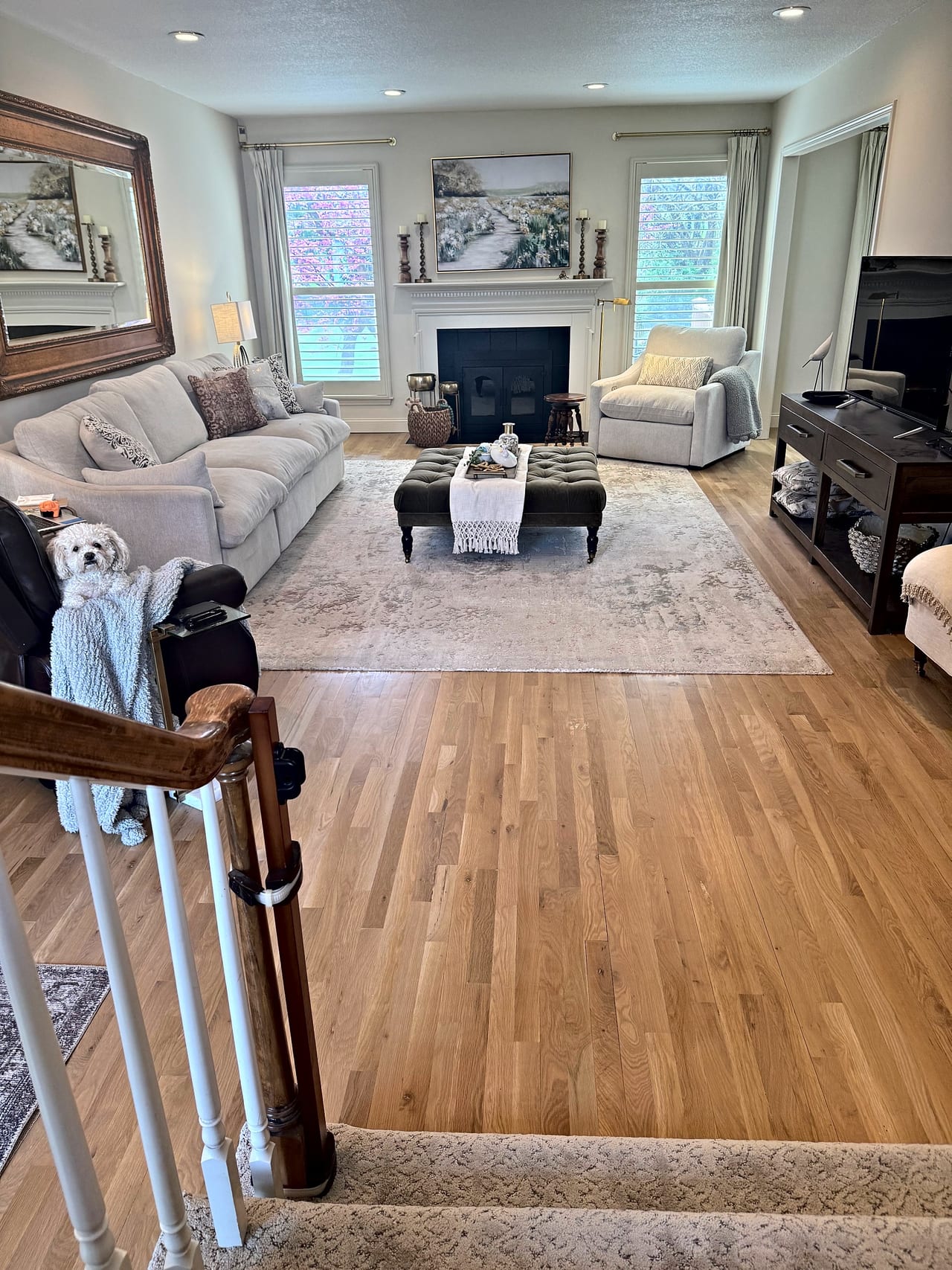
Hardwood Flooring Installation
Kansas City Metro
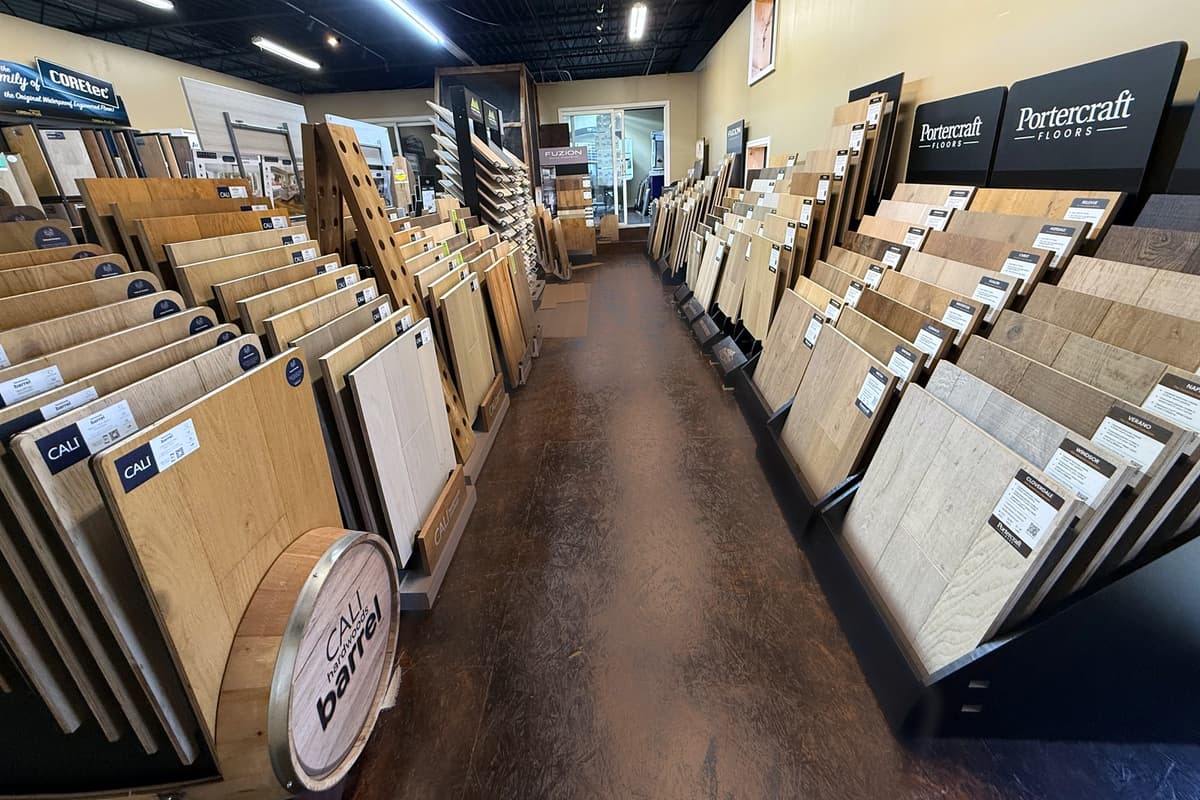
Visit our private showroom in Lenexa and talk it through with Jason. Our own crews install the floor.
Refinishing a floor you already have? See the refinishing page.
Looking at engineered hardwood? It has its own page.
What We Suggest
See the floors first, then decide at home.
- ✓ Compare floors side by side in our appointment-only showroom
- ✓ Take samples home and see them in your own light
- ✓ We come out, measure and check the subfloor
Call or Text Jason for an Estimate (913) 839-1609
Find the Page for Your Project
- Putting in a solid hardwood floor You're on the right page. The selection guide is below. Keep reading
- Leaning toward engineered hardwood Real wood on top, not vinyl, over a core that holds the board flat. Engineered hardwood page
- After the wide-plank white oak look It comes solid or engineered, and the color is a stain choice. White oak page
- Refinishing a floor you already have A new color on the same boards, or new wood matched to the old floor. Refinishing page
A Floor You Buy Once
Solid hardwood is one piece of wood from top to bottom. When it wears, or your taste changes, it can be sanded back to bare wood and finished again, in the same color or a new one, several times over its life. Chosen carefully and installed correctly, it is a floor you should only need to buy once.
Choosing carefully means matching the wood to the room. The species and finish have to suit how the room gets used, and the floor has to suit what is under it and the humidity in your house. A sample shows you the color and the grain. It can't tell you whether the floor fits the room.
Installing correctly starts with the subfloor and the transitions. Every board needs a flat, dry subfloor under it, and the new floor needs clean edges where it meets the rooms around it.
Jason works through both with you before anything is ordered. Since our crews install the floor, we answer for the entire job.
Far More Floors, and Jason to Show You.
A visit to our private showroom in Lenexa is a consultation with Jason, by appointment. Tell him what you have in mind and he takes you to that display. Then he may show you something you didn't ask about: a species that hides wear better, a width that suits the room, or a floor that costs less and looks the part.
It is a lot like looking at samples at home, with far more floors than we could bring to your door, side by side under one light. Find the few you like and take samples home to see them in your own rooms. We pick them up when we come out to measure. Already know the floor you want? We'll bring samples of it instead. There's no consultation fee either way.
Not ready to visit? Start with a phone call. Ask Jason for an estimate and he can give you a realistic range before anyone comes out.
Hardwood Selection Guide
Six decisions shape every hardwood flooring project. Here is what each one means for a Kansas City metro home, and what we most often recommend.
| Topic | What It Means | Best Fit | What We Recommend for Kansas City Metro Homes |
|---|---|---|---|
| Solid vs Engineered | Solid is one piece of hardwood top to bottom, and it can be refinished several times over its life. Engineered is a genuine hardwood wear layer bonded to a stable core. An engineered floor with a thick enough wear layer can usually be refinished at least once, sometimes more. | Solid for many main levels. Engineered for stability over concrete, basements, and wider planks. It has its own page. | Homes here deal with real humidity swings between seasons, and engineered handles those shifts better than solid below grade and over the concrete slabs common in this area. |
| Prefinished vs Site-finished | Prefinished boards arrive with their finish already applied at the mill, cured under UV light in four to seven coats fortified with aluminum oxide. Site-finished floors are installed raw, sanded flat in your home, and coated in place, so the finish runs unbroken across every board joint instead of dropping into the small bevel at each edge of a prefinished board. The bevel has a job. A prefinished floor is never sanded flat after installation, so the groove absorbs the small height differences between boards. | Prefinished when you want to walk on the floor the day it goes down, with no sanding dust and no finish odor in the house. Site-finished when you need an exact stain match to existing floors, a custom color, or one unbroken surface through doorways and stairs. | Many of our customers choose prefinished, and what we've seen is that the schedule decides it as often as the finish does. A site-applied finish has to cure before furniture and rugs come back, and how long depends on the finish. If you are matching or extending an existing floor, site-finished is usually the right call, and it is work our own crews do. Either way we will tell you what the finish you are choosing means for the week of installation, and for the year after. |
| Species and Look | Species determines color, grain pattern, hardness, and how well the floor hides daily scratches from pets and traffic. Hardness and concealment are different things. A dark floor can be hard and still show every scratch, because a scratch exposes the lighter wood underneath. | Red oak is the classic Kansas City metro floor, and still the one most people picture: warm, forgiving grain that hides wear well. Hickory is the hardest common domestic species, right for active households that want rustic character. Maple suits calm modern rooms, with one caveat: its tight, uniform grain shows scratches more readily than oak. Walnut is chosen for its color, not its toughness. It is softer than oak, so it belongs in lower-traffic rooms that deserve its depth. | White oak is the most requested species here right now; it is popular enough that we built a page for it. We carry White Oak, Red Oak, Hickory, Walnut, Maple, and more, in looks from golden oak to French oak character, and if you have a species in mind, ask us. We can usually source it. |
| Grade and Character | Select grade is clean and uniform. Character grade includes natural knots and variation for a warm, lived-in look. | Select for calm, modern spaces. Character for rustic, farmhouse, or active homes where variation hides wear. | In homes with kids, pets, and high traffic, Character grade is often the smarter long-term choice: natural variation hides day-to-day wear far better than a clean, uniform floor that shows every mark. We'll put samples of both in front of you so you can see the difference in person. |
| Plank Width and Layout | Wider planks (5–8"+) look premium but require precise subfloor prep and careful layout planning. | Great for open floor plans. Best when direction, transitions, and stairs are planned so the floor feels continuous. | Wide-plank White Oak is one of the most popular floors we install here, and it rewards careful prep. Most wide planks are engineered, which has its own page. We check moisture and flatness before recommending a width, and we plan layout direction early so the floor runs cleanly through open-plan spaces and into adjacent rooms. |
| Finish and Sheen | Matte and satin sheens show day-to-day wear far less than high gloss. Texture can help conceal surface scratches within the grain. | Most Kansas City metro homes choose matte or satin for a clean look and lower maintenance. | For active households, especially those with dogs, our most recommended combination is wire-brushed texture with a matte finish: the texture hides surface scratches within the grain, and matte shows footprints and dust far less than gloss. We can show you samples before you decide. |
Solid vs Engineered
- What it means
- Solid is one piece of hardwood top to bottom, and it can be refinished several times over its life. Engineered is a genuine hardwood wear layer bonded to a stable core. An engineered floor with a thick enough wear layer can usually be refinished at least once, sometimes more.
- Best fit
- Solid for many main levels. Engineered for stability over concrete, basements, and wider planks. It has its own page.
- Kansas City metro
- Homes here deal with real humidity swings between seasons, and engineered handles those shifts better than solid below grade and over the concrete slabs common in this area.
Prefinished vs Site-finished
- What it means
- Prefinished boards arrive with their finish already applied at the mill, cured under UV light in four to seven coats fortified with aluminum oxide. Site-finished floors are installed raw, sanded flat in your home, and coated in place, so the finish runs unbroken across every board joint instead of dropping into the small bevel at each edge of a prefinished board. The bevel has a job. A prefinished floor is never sanded flat after installation, so the groove absorbs the small height differences between boards.
- Best fit
- Prefinished when you want to walk on the floor the day it goes down, with no sanding dust and no finish odor in the house. Site-finished when you need an exact stain match to existing floors, a custom color, or one unbroken surface through doorways and stairs.
- Kansas City metro
- Many of our customers choose prefinished, and what we've seen is that the schedule decides it as often as the finish does. A site-applied finish has to cure before furniture and rugs come back, and how long depends on the finish. If you are matching or extending an existing floor, site-finished is usually the right call, and it is work our own crews do. Either way we will tell you what the finish you are choosing means for the week of installation, and for the year after.
Species and Look
- What it means
- Species determines color, grain pattern, hardness, and how well the floor hides daily scratches from pets and traffic. Hardness and concealment are different things. A dark floor can be hard and still show every scratch, because a scratch exposes the lighter wood underneath.
- Best fit
- Red oak is the classic Kansas City metro floor, and still the one most people picture: warm, forgiving grain that hides wear well. Hickory is the hardest common domestic species, right for active households that want rustic character. Maple suits calm modern rooms, with one caveat: its tight, uniform grain shows scratches more readily than oak. Walnut is chosen for its color, not its toughness. It is softer than oak, so it belongs in lower-traffic rooms that deserve its depth.
- Kansas City metro
- White oak is the most requested species here right now; it is popular enough that we built a page for it. We carry White Oak, Red Oak, Hickory, Walnut, Maple, and more, in looks from golden oak to French oak character, and if you have a species in mind, ask us. We can usually source it.
Grade and Character
- What it means
- Select grade is clean and uniform. Character grade includes natural knots and variation for a warm, lived-in look.
- Best fit
- Select for calm, modern spaces. Character for rustic, farmhouse, or active homes where variation hides wear.
- Kansas City metro
- In homes with kids, pets, and high traffic, Character grade is often the smarter long-term choice: natural variation hides day-to-day wear far better than a clean, uniform floor that shows every mark. We'll put samples of both in front of you so you can see the difference in person.
Plank Width and Layout
- What it means
- Wider planks (5–8"+) look premium but require precise subfloor prep and careful layout planning.
- Best fit
- Great for open floor plans. Best when direction, transitions, and stairs are planned so the floor feels continuous.
- Kansas City metro
- Wide-plank White Oak is one of the most popular floors we install here, and it rewards careful prep. Most wide planks are engineered, which has its own page. We check moisture and flatness before recommending a width, and we plan layout direction early so the floor runs cleanly through open-plan spaces and into adjacent rooms.
Finish and Sheen
- What it means
- Matte and satin sheens show day-to-day wear far less than high gloss. Texture can help conceal surface scratches within the grain.
- Best fit
- Most Kansas City metro homes choose matte or satin for a clean look and lower maintenance.
- Kansas City metro
- For active households, especially those with dogs, our most recommended combination is wire-brushed texture with a matte finish: the texture hides surface scratches within the grain, and matte shows footprints and dust far less than gloss. We can show you samples before you decide.
Species, grade, plank width, and sheen are easier to judge on a finished floor. Our Work shows floors in Kansas City metro homes, new and refinished.
Hardwood Installation FAQ
Questions about pricing, prep, refinishing, matching, squeaks, stairs and furniture.
Are you cheaper than a big box store?
Probably not by the square foot, and we don't try to be. What we price is the finished floor: the wood, prep, installation, trim, tear-out and haul-away. Call for an estimate and Jason can give you a realistic range. The written quote comes after we have seen the house, and the company that sells you the floor is the one that installs it. When you compare, compare finished floor to finished floor, not the price on the box.
What information do you need for an accurate quote?
The basics help us start: project areas, existing floor type, approximate square footage, and whether stairs or transitions are involved. From there we confirm subfloor condition, moisture, layout direction, and installation approach. You don't need to have all of this figured out before you call. That's what the conversation is for.
Can you refinish or recolor my existing hardwood floors?
Yes, and it's some of our favorite work. Solid hardwood can be refinished several times over its life. Engineered floors with a thick enough wear layer can usually be refinished at least once, sometimes more. Refinishing is also how you change the color and finish as styles change, so a floor that looked current years ago can come back in a completely different stain and sheen. We also extend existing hardwood into adjacent rooms and match stain to floors that are decades old. Ask us about your existing floors when you call.
Do you match existing hardwood or tie into older floors?
Often, yes. This is work many flooring companies refer out. Matching involves species, width, grade, and finish. Getting it right requires seeing the existing floor in your home's actual lighting, understanding how the wood has aged, and planning the transition carefully. We work out what's realistic once we're on-site, and if a match isn't achievable, we say so. When it is, the seam should be something you have to look for.
How do you prevent squeaks, gaps, or movement later?
Most squeaks and gaps trace to subfloor condition, fastening, or the home's humidity over time. We check moisture and flatness before installation, fasten to the flooring maker's schedule, and tell you the humidity range that protects the floor afterward. Wood moves with the seasons; small movement is normal, and the prep is what keeps it small.
What about stairs and transitions?
Stairs and transitions are some of the most demanding hardwood work, and we plan them before installation begins, not as a change order on the day of install. We map the stairs, landings, and room-to-room transitions up front. Getting these details right is what makes a floor feel continuous and intentional throughout your home, instead of leaving edges that give away where it was added later.
Do you move furniture?
We confirm what needs to be moved and what you prefer to handle before installation begins. Some projects are simple clears, others require a staged plan by room. We keep it straightforward and clearly defined so there are no surprises on installation day.

You're Hiring a Reputation.
Not a Retail Clerk.
"I founded All Dimensions Flooring with a single goal: to combine the selection of a major retailer with the personal accountability of a craftsman. You aren't handed off to a rotating cast of clerks. You're hiring my 25-year reputation."
Jason Jespersen is personally involved in every project. Most people start by talking the job through with him, then come to the showroom to see the floors.
★★★★★ His name comes up throughout our reviews
Real Reviews From Real Homeowners.
What 237 Reviews Can and Can't Tell You
A review count proves people hired us. It cannot prove you should. What the reviews can do is answer the two questions this page cannot answer for itself: whether the one-company promise holds up on real projects, and what we are like to work with between the first call and the final walkthrough.
So read a few. You will see homeowners writing about the process as much as the finished floor: the communication, the schedule, the crew in their home. We cannot write those reviews and we cannot edit them. They sit on Google, so check them the way you would check any company's, including anyone else you are considering. Then call for an estimate, or tell us about your project below.
Ready to Talk to Jason?
Tell us about your floors. Jason will reach out within one business day to listen and help you figure out what makes sense for your floor.